|
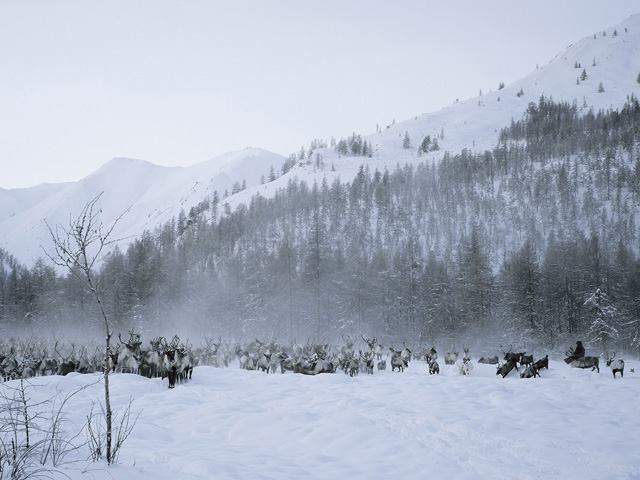
AT THE CORRAL NIKOLAYEV MATVEY GATHERING REINDEERS |
Even and The Climate | 2007 | 59x74 inches
Caribou (North American forms of Rangifer tarandus) and reindeer
(Eurasian forms of the same species) are of primary importance to people
throughout the Arctic for food, shelter, fuel, tools, and other cultural items.
Caribou and reindeer herds depend on the availability of abundant tundra
vegetation and good foraging conditions, especially during the calving season.
Climate-induced changes to arctic tundra are projected to cause vegetation
zones to shift significantly northward, reducing the area of tundra and the
traditional forage for these herds. Freeze-thaw cycles and freezing rain are also
projected to increase. These changes will have significant implications for the
ability of the caribou and reindeer populations to find food and raise calves.
Future climate change could thus mean a potential decline in caribou and
reindeer populations, threatening human nutrition for many indigenous
households and a whole way of life for some arctic communities.
We spent eight days during November 2007 in the Tomponski Region of the
Verkhoyansk Range in Siberia, considered the coldest inhabited place on Earth.
One evening we had a long chat with Nikolayev Matvey,
head of camp 11 there. He talked about his perceptions of climate
change and its impacts on his people. He observes that the
snow is now wetter than it ever used to be. It used to be very
cold and very dry snow. Now they have wetter snow, at times
it is creating a thin layer of ice on top of the snow that the
reindeer finds difficult to forage through. He said he has to take
the reindeers higher up in the mountain to find food at times
during winter months. He also talked about the willows are
growing taller and bushier and this at times impacts reindeers'
migration and Matvey said they may change their routes.
Subhankar Banerjee's Siberia visit in November 2007 was made possible by an assignment from
the Vanity Fair magazine. The story appeared in May 2008 issue with text by Alex Shoumatoff. |
READ ONLINE
|