|
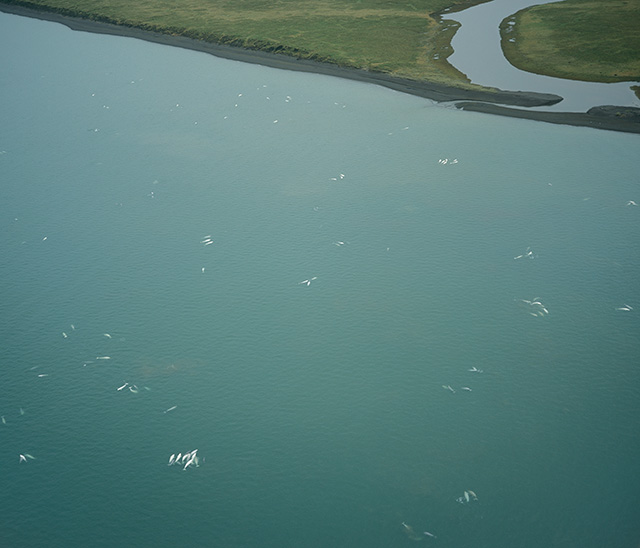
BELUGA WHALES WITH CALVES | Oil and The Whales | 2006 | 62x70 inches
Kasegaluk lagoon, along the northern Chukchi Sea coast is one of the most important lagoon systems in the circumpolar Arctic. The lagoon is one hundred twenty-five miles long and there are five major rivers drain into the lagoon creating a unique and rich ecological habitat for a host of species. About three to four thousand Beluga whales come to the lagoon and along its shores each summer. They are also known to calve along the Kasegaluk and the small Oomalik lagoon just south of it. The lagoon and its nearby habitat is important for a host of nesting birds and also critical staging area for birds that come to the lagoon from Teshekpuk lake. United States Government for the past several years has been planning to open up the entire Chukchi Sea and the Beaufort Sea of the Alaskan Arctic to oil and gas development. Several leases have already been sold in the Beaufort Sea and leases will be offered on the entire 33.8 million acres Chukchi Sea Planning Area in spring 2008. Inupiat communities of Barrow, Point Hope, Point Lay, and Wainright depend on marine mammals of the Chukchi Sea, including, Bowhead and Beluga whales, seals, walrus and other marine species. These communities oppose offshore oil and gas development, as they fear such development would seriously impact the whales and their migrations and subsequently the Inupiat culture. Inupiat people of Point Lay depend primarily on Beluga whales for their subsistence food. An estimated ten thousand Bowhead and over sixty thousand Beluga whales migrate through the Chukchi and Beaufort Seas.
|